
Advantages of gasoline generators
A gasoline generator is undoubtedly an excellent backup power source for your home, cottage, or even as a direct source of energy in the garden. Gasoline generators are among the most commonly used, and although they naturally have a few drawbacks, their advantages outweigh them. Let’s take a closer look at the benefits of gasoline generators in our article.
The drive of a gasoline generator
As the name of the device suggests, the fuel type is, of course, gasoline. The main advantage is that this fuel is available at every gas station, and you can easily stock up on it at almost any time of day and virtually anywhere. Natural 95 is suitable for gasoline generators.
The size of a gasoline generator
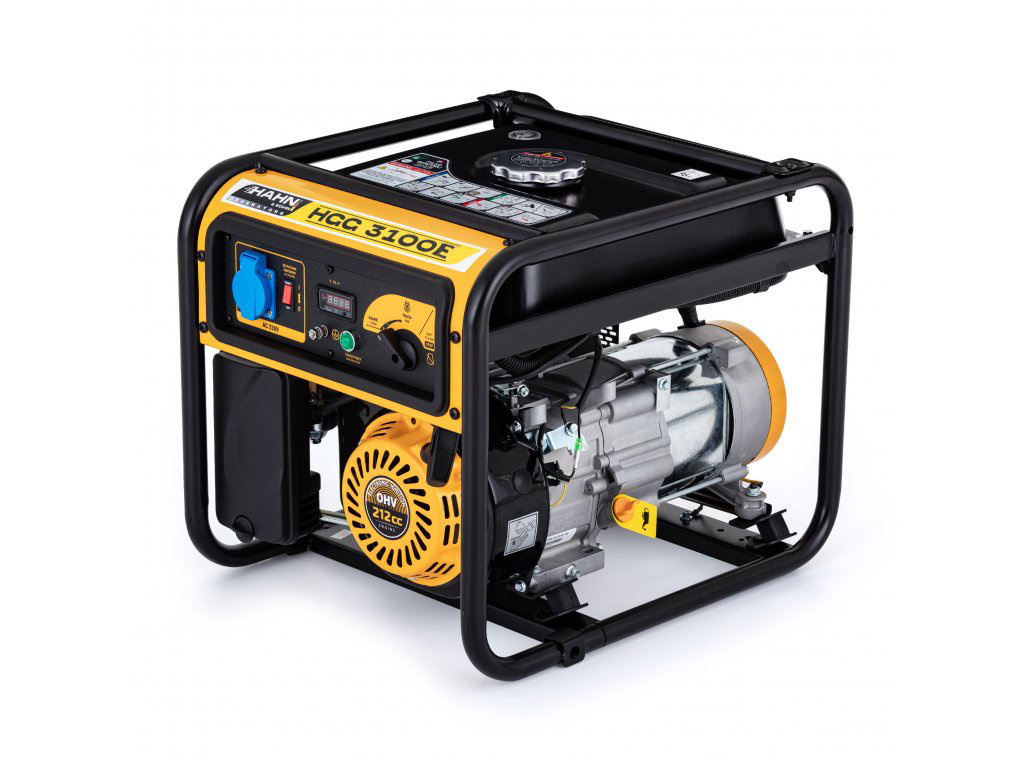 Compared to diesel generators, gasoline generators are generally smaller, making them easy to store in a utility room, garden shed, or small cottage. Thanks to their compact size, a gasoline generator can also be easily moved from place to place, since smaller dimensions naturally mean a lower weight.
Uses of a gasoline electric generator
A major advantage is that due to their construction, voltage, and so on, this type of generator can be used to power more sensitive electronics such as computers or televisions. At the same time, it can also handle appliances with higher power demands, such as refrigerators and freezers.
A gasoline generator as a backup power source
One drawback is that their use is generally short-term. A gasoline generator can also be used as a backup source for a boiler, wastewater treatment systems, and similar appliances that require electrical energy during power outages.
The noise level of a gasoline generator
Each of us has likely walked past a construction site and heard the loud noise of a running generator. So you may wonder whether such a noisy device can be used near your home without disturbing you. We can reassure you — construction sites typically use high-power diesel generators, whereas a gasoline generator used at home is much quieter.
How to reduce generator noise?
Although gasoline generators are quieter than other types, they still produce some noise because they are powered by an engine. Fortunately, it is possible to partially soundproof the generator so that you can run it occasionally even in an indoor utility room. First, place silent blocks or a thick rubber mat under the device, as a significant portion of the noise is transferred through contact with the floor. You can also build a kind of wooden box from OSB boards around the generator — create it from two layers of boards with a layer of foam between them. However, you must never forget to include a fan to remove exhaust fumes and heat from the enclosure!
Read our dedicated article on soundproofing generators.